
Doral Previous Residents by Era
The right source depends on when the Doral address took shape. Current parcels begin at the Property Appraiser, modern ownership moves through the Recorder, and municipal permits become useful only after Doral's incorporation era. Older regional sources describe Dade or Miami geography rather than a City of Doral.
| Source | Years It Covers | Where Held | What It Shows |
|---|---|---|---|
| Recorder online index | Most records from 1974 forward | Miami-Dade Clerk web portal | Transfers, parties, dates and legal description |
| Earlier deed books | Before 1974 and web gaps | Records Library and archival microfilm | The property chain before online coverage |
| Regional directories | Verified 1904 and Polk examples, 1920s to 1942 | MDPLS, HistoryMiami, State Library | Named occupants where an edition covers the road |
| Federal and state census | Federal public through 1950; Florida 1885, 1935, 1945 | NARA and library databases | Pre-development households and geography |
| Doral and county permits | Split at October 1, 2004 | Doral Building and Miami-Dade | Work, applicants, contractors, dates and status |
For a recent address, begin with the parcel and deed. For an early subdivision, carry the lot, block, and plat into older books. Census schedules now public only through 1950 predate most Doral residences, so they are strongest for the land's pre-development setting rather than a modern house.
Start Doral Address History With Folio
Validate the full address through Miami-Dade MARS, preserving the NW direction and street type. Then open the Property Appraiser search. Its parcel card can supply the 13-digit folio, current owner, situs address, owner mailing address, legal description, sales, assessment history, exemptions, structure facts, sketches, and present or prior aerials.
The folio links city permit and lien records to county tax and GIS systems. The legal description is even more important for deep history because subdivision, lot, block, and plat book-page can stay stable when postal forms change. Mailing address is only the destination for tax notices and cannot prove that an owner occupied the Doral parcel.
Trace Miami-Dade Owners Backward
The Miami-Dade Recorder indexes deeds, mortgages, liens, affidavits, plats, judgments, and related instruments. To trace previous residents responsibly, use deeds first to establish owners. Then test occupancy with other sources. The backward chain follows the seller from one purchase to the one before it.
- Save the current owner, folio, and full legal description from the parcel card.
- Find that owner's acquisition deed by party name, legal description, CFN, or book and page.
- Record the grantor, date, and exact land description from the indexed record or image.
- Search that grantor as an earlier grantee, confirm the same land, and repeat.
- At the 1974 web boundary, use Records Library computers, staff help, mail, or the counter.
- Grantor and grantee
- The grantor gives or sells an interest; the grantee receives it.
- Chain of title
- The linked series of transfers for the same piece of land.
- Legal description
- The recorded land identity, often a subdivision, lot, block, and plat reference, rather than a postal address.
The standard index is free. Advanced filters use $1 units. At the Records Library, copies are $1 per page, certification is $2, and staff name searches cost $2 for each name and year.
The Recorder and deed-records page pictured below is the official starting point for the previous-residents ownership chain.
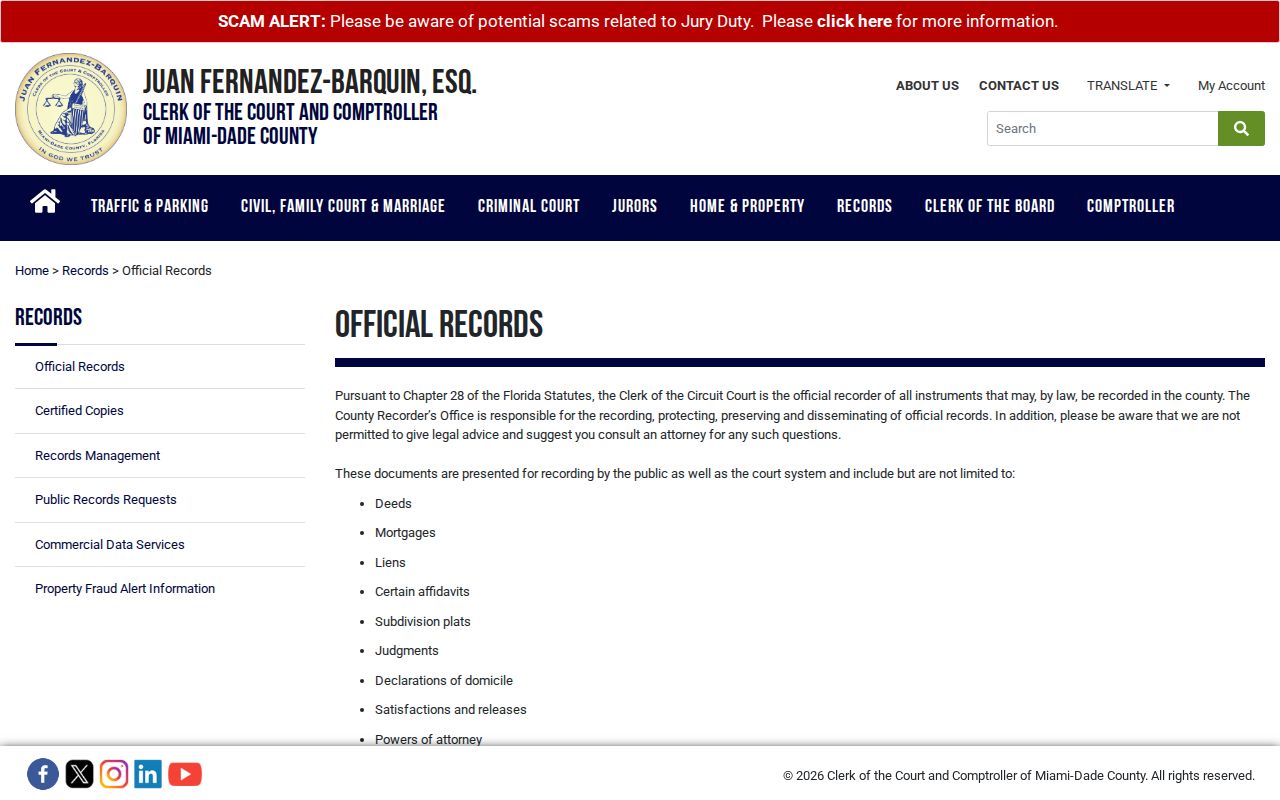
Its guidance separates online Official Records from the Records Library fallback needed for older instruments and unavailable images.
Doral Previous Residents Before 1974
A blank web result does not end the deed chain. Most Miami-Dade recorded documents from 1974 forward are online, while earlier material is being added and remains available through the Records Library. Its public computers and staff support sit at 20 NW 1st Avenue, Suite 5.246, Miami. Mail requests should include the full name and record type plus the address or legal description for a deed or mortgage.
The Miami-Dade Records Library is shown below. Its older holdings are essential when a Doral parcel's legal identity predates online indexing.
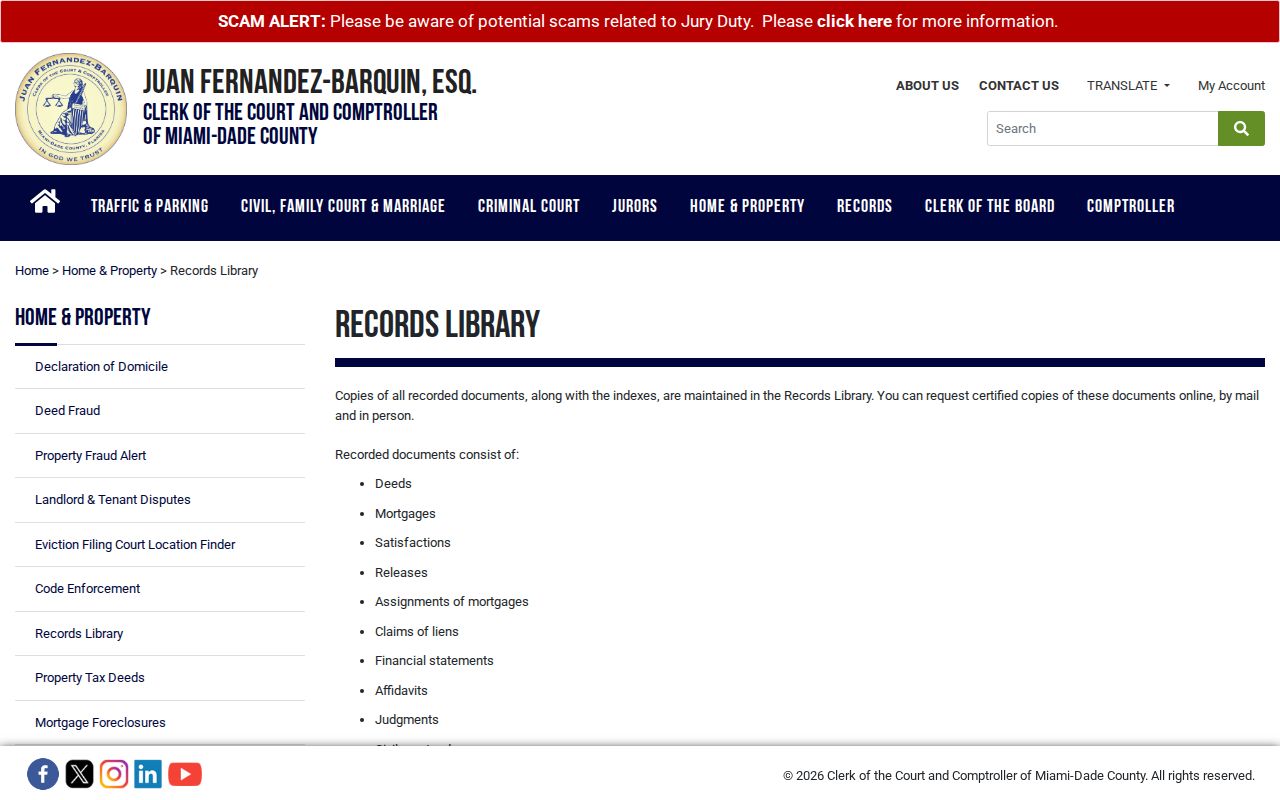
The library closes the portal gap through public terminals, copy ordering, mail, counter access, and staff search rather than forcing a guessed historical owner.
Doral Address History Crosses 2004
Doral incorporated in 2003, and its open-permit form marks October 1, 2004 as the custody seam. Permits initiated by Miami-Dade before that date remain a county search. Later city records can add applicants, owners, contractors, work descriptions, dates, status, and inspections to the deed time line.
Submit Doral's open-permit form by email, fax, or in person. The research fee is $35 per address or folio. Code and lien research follows a separate city CSS process at $150 per address, targets three business days, and does not replace a county Official Records lien search. Structure data and past aerials on the parcel card can help date change when a permit is missing.
Test Doral Directories Year by Year
A historical directory may turn an address into an occupant name, but only if that edition has a reverse street section and covers the road in question. Verified regional material includes a resident-style 1904 directory and Polk Miami or Greater Miami volumes from the 1920s through documented 1942 examples. The complete year run and the reverse-directory span are not published.
Ask Miami-Dade Public Library System Main, HistoryMiami, or the State Library to confirm the year and call number before relying on it. Early books are Miami or Dade regional sources, not City of Doral volumes. Doral's resort opened in 1962, residential development grew in the early 1980s, and the city came later. The Doral city directory page covers the collections and entry abbreviations in detail.
Pair Doral Previous Residents Sources
Owners are only part of a house history. A directory entry can name a householder, spouse, occupation, or address. Census schedules may name a full household, but federal schedules are public only through 1950 and Florida's surviving 1885, 1935, and 1945 counts are off-decade checkpoints. Most current Doral homes are newer than all of them.
- Confirm the address and historical road or subdivision label for the target year.
- Check a verified directory edition immediately before and after that year.
- Pair a 1930 directory with the 1930 federal census, or use Florida's 1935 and 1945 schedules between federal counts.
- Record spelling, spouse, work, and address exactly, then test the person in deeds, newspapers, or probate.
MDPLS demonstrated this method in 2026 by combining 1924 and 1927 Miami directories with photographs and newspaper coverage to trace address changes. That example supports the method, but not automatic Doral coverage.
Close Doral Trails With Life Records
When a past resident disappears from a directory, the Miami-Dade Obituary Index, newspaper databases, and probate cases can supply a death, move, survivor, or heir lead. The MDPLS genealogy collection holds more than 27,000 volumes and 35,000 microforms, while its obituary index exceeds 915,000 names. Those scale figures make the library useful, but a result still needs verification in the full notice or court record.
Search probate by party through the Clerk's civil, family, and probate system. Marriage and divorce certifications can help distinguish same-name people when lawful access permits. The Florida marriage certificate service pictured below explains the state access route.
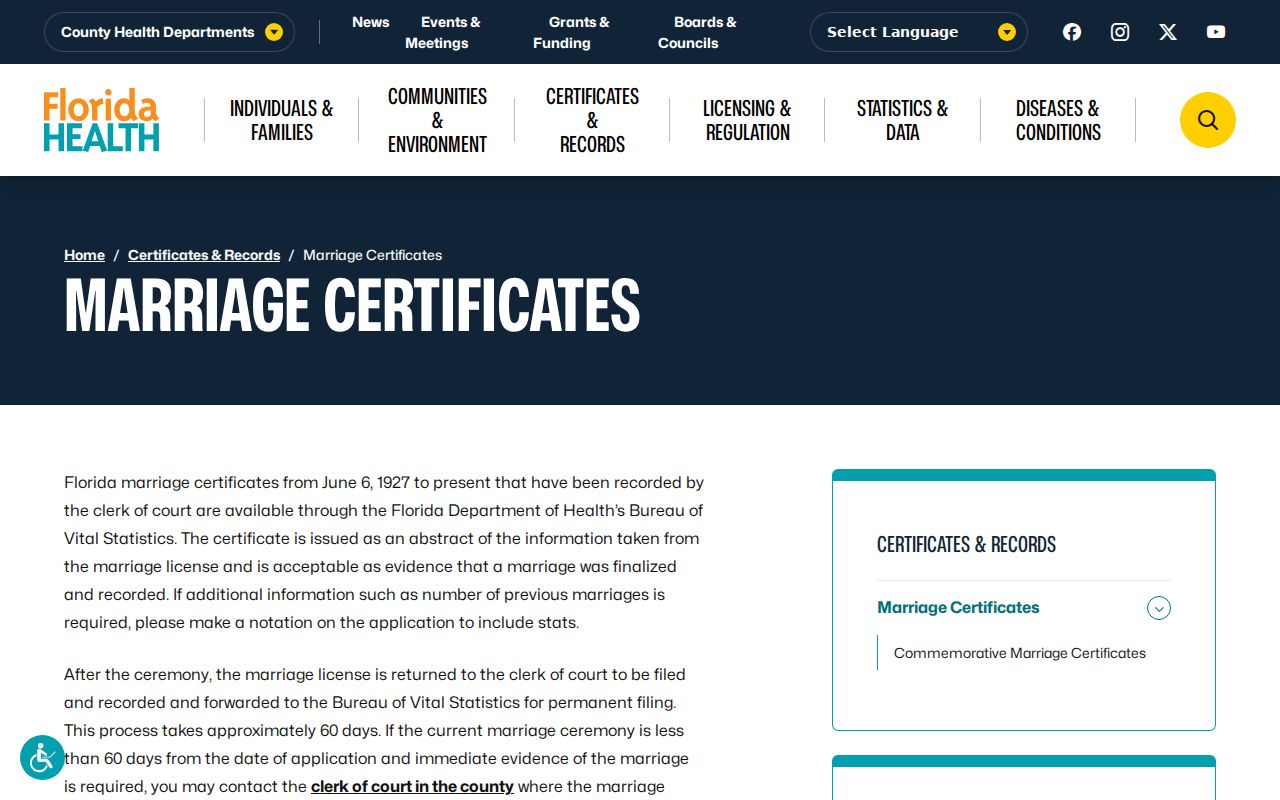
A certificate or probate docket should support a specific identity link, not substitute for evidence that the person occupied the target address.
The Florida electronic court-record access rules pictured below explain why remote visibility can differ by record type and user role.
If an indexed probate matter lacks a viewable image, request the public file or certified copy from the Miami-Dade Clerk instead of assuming no record exists.
Doral Land Records Before the City
Miami-Dade County dates to 1836, long before Doral's city government. An unusual custody story explains why old land work moves through county and archival books. Early Dade records were held at the Monroe County courthouse in Key West. Around 1881, Clerk James A. McCrory traveled there and hand-copied Dade entries into three Miami sets: a Deed Book, Transfer Book, and Tax Book.
A later courthouse fire did not destroy Dade's returned records, according to the WPA Historical Records Survey. The Florida Memory county-records survey preserves that account. It does not promise that every instrument survives, but it shows why a pre-Doral legal description belongs in county or archival custody rather than a city-office search.
The Florida Statutes portal shown below is the official place to verify current state rules that govern record access.
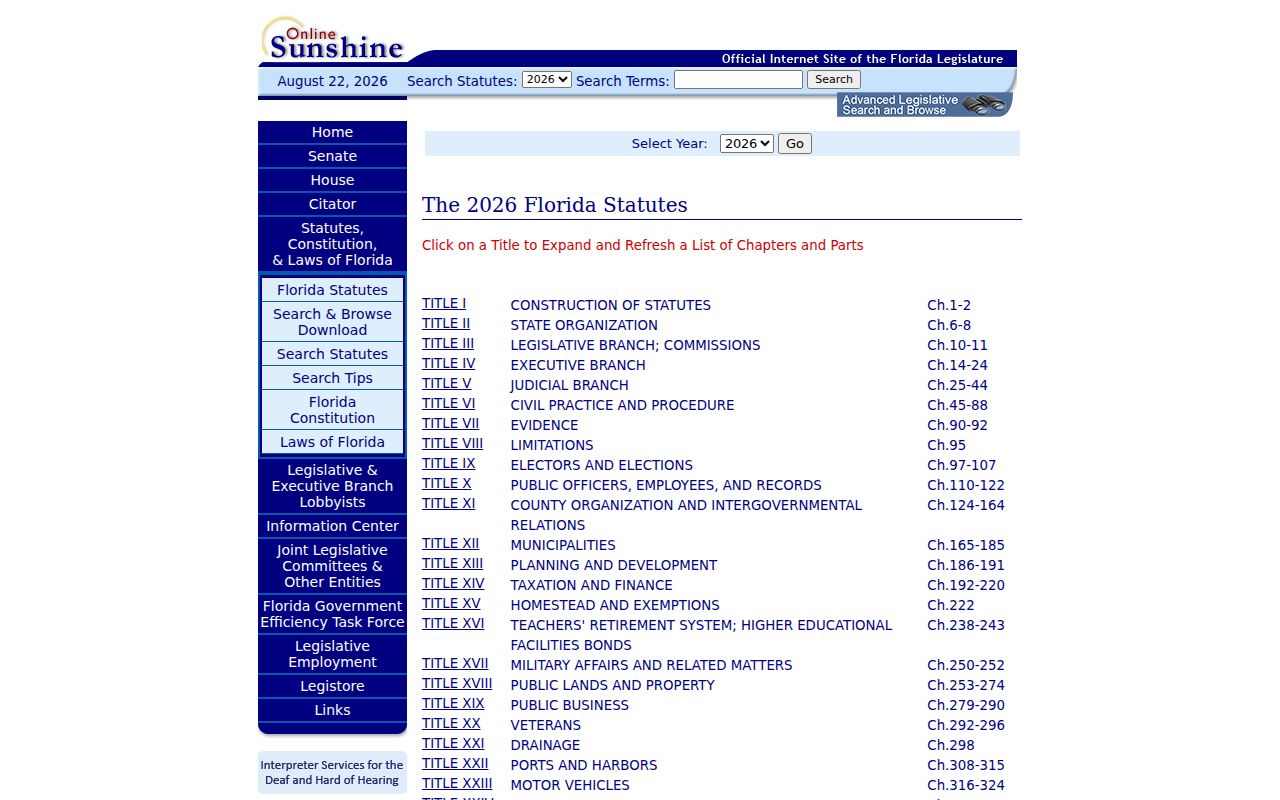
Current law should be checked there before requesting restricted material or relying on an old access summary.
Doral Past Households Need Proof
A deed proves a recorded transfer, not every person who lived there. A reverse directory entry can be a strong occupant clue for its publication year, while a census schedule can identify household relationships in an older era. Obituaries and probate files may connect relatives or heirs after a person leaves the record trail. Each source has its own date and purpose.
Keep a research log with the exact name form, source title, year, address, folio or legal description, and the point that the record actually supports. Do not merge two same-name people merely because both have a Miami-Dade connection. Doral's multilingual population also makes accent-free, hyphenated, unhyphenated, paternal, and maternal surname searches useful, but spelling variants are leads rather than proof.
Lawful use. Research Doral previous residents for house history, genealogy, or estate work. Never use a historical trail to harass, track, or harm a living person.